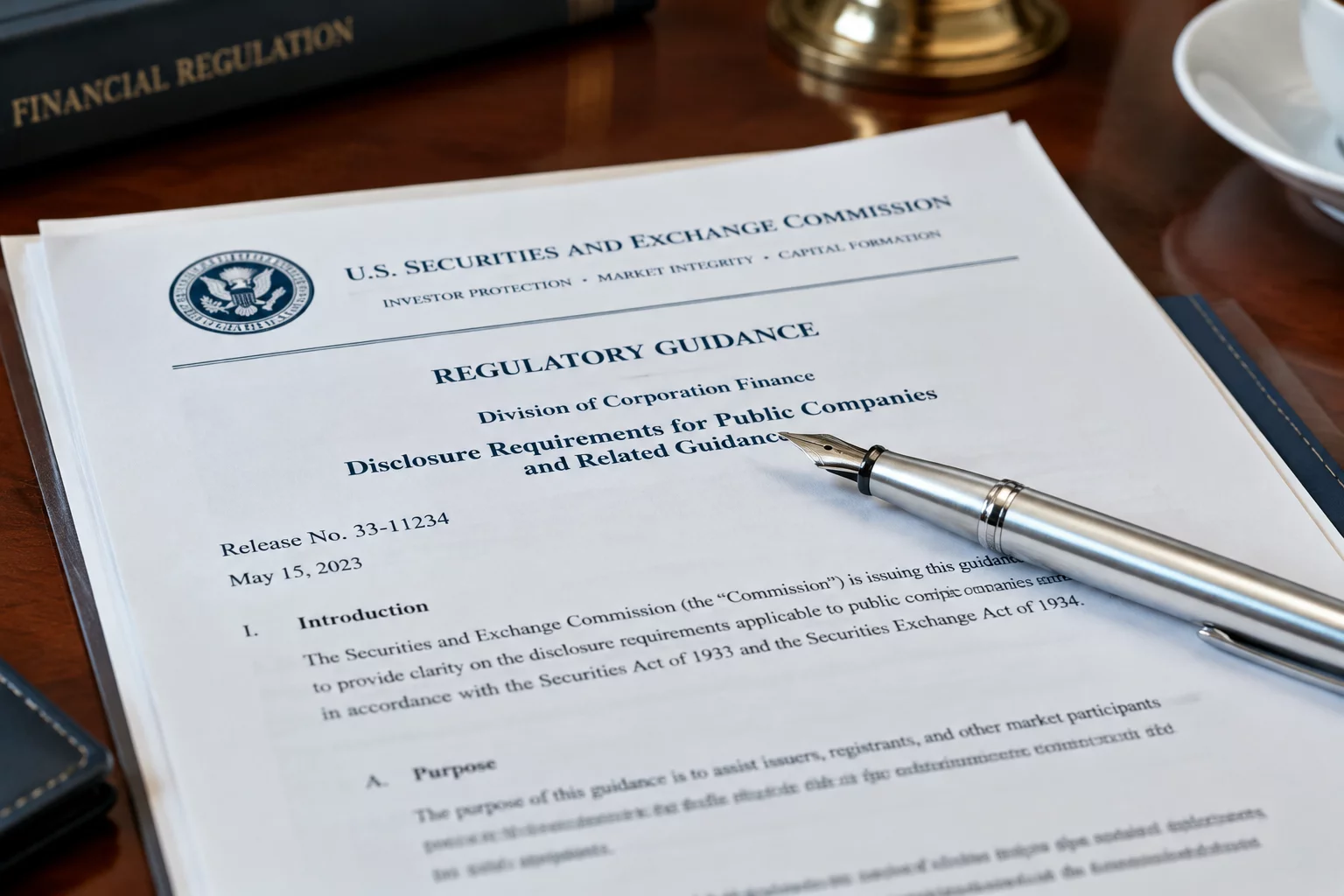
Regulatory Rationale and the $5 Million Threshold
The Securities and Exchange Commission approved comprehensive amendments to Nasdaq’s listing criteria, targeting structural vulnerabilities that have historically affected micro-cap equities. Under the newly sanctioned framework, companies seeking an initial listing or striving to maintain an active presence on the Nasdaq Capital Market must satisfy a heightened minimum Market Value of Listed Securities (MVLS) requirement set strictly at $5 million. This policy shift directly addresses long-standing concerns regarding thinly traded equity securities that present substantial price manipulation risks.
Market surveillance reports indicated that smaller entities frequently entered public markets with nominal capitalization, using minimal floating share distributions to maintain artificial bid prices. The new $5 million baseline forces issuers to demonstrate genuine capital backing, operational durability, and sufficient market capitalization before accessing public exchange liquidity. For listed corporations hovering near historic minimums, the decision signals a definitive transition toward tighter compliance governance.
Monitor Asset Health and Market Risk
Organize personal equity holdings, review private assets, and analyze portfolio allocations with KU-BIRA data management tools.
Accelerated Delisting and Reverse Stock Split Guardrails
Prior to this regulatory ruling, non-compliant corporations frequently utilized sequential 180-day grace periods to rectify share price deficiencies. Issuers repeatedly executed high-ratio reverse stock splits to artificially lift share prices above the $1.00 minimum bid requirement, only to experience rapid post-split downward drift. The SEC approval eliminates repetitive cure windows for issuers that simultaneously fail the $5 million MVLS floor and minimum bid thresholds.
Establishing an unyielding $5 million capitalization floor ensures that public markets remain reserved for enterprises with sustainable balance sheets and genuine market sponsorship.
The approved provisions introduce specific structural constraints designed to close procedural loopholes across exchange operations:
- Cumulative Reverse Split Ceiling: Issuers that have effected reverse stock splits with a cumulative ratio of 1-for-250 or greater over the prior 24 months are precluded from utilizing additional cure periods.
- Extended Compliance Verification: Issuers regaining compliance through share consolidation must maintain compliant pricing for a minimum of 20 consecutive trading sessions rather than 10 sessions.
- Immediate Staff Delisting Notices: Companies falling beneath the $5 million MVLS benchmark while already under compliance supervision will receive expedited delisting determinations without appeal stays.
Implications for Public Portfolios and Capital Allocation
The implementation of these stricter standards will inevitably trigger a wave of corporate restructurings, capital raises, and transitions to over-the-counter (OTC) secondary markets for vulnerable small-cap entities. While this transition may reduce the total aggregate number of micro-cap listings on Nasdaq, it significantly improves the overall quality of listed securities available to institutional and retail market participants.
For private wealth managers and self-directed users tracking equity allocations, these regulatory changes highlight the critical importance of monitoring asset balance sheets and liquidity metrics. Portfolios holding emerging growth equities should account for exchange compliance standing to mitigate unexpected delisting risks and sudden trading halts.